I have spent twenty years in political communications — building networks, breaking stories, running advocacy operations. Throughout all of it, one problem never went away: knowing what was being said about your issues, by whom, and fast enough to do something about it.
The tools available to solve that problem were never good enough. So I built one that is.
The problem nobody was solving#
Political and corporate communications teams in Canada have been cobbling together media monitoring from a patchwork of tools that were never designed for their environment. The legacy platforms — built for marketing teams tracking brand mentions — offer keyword alerts and sentiment scores. And they routinely miss what matters most.
The fundamental issue is that these tools were built around a concept of “sentiment” that made sense a decade ago but is nearly useless for serious communications work. Labeling a news segment as “positive” or “negative” tells you almost nothing about what is actually happening in the story, who is driving it, what the implications are, or what you should do about it. A story can be factually accurate, politically devastating, and have “neutral” sentiment. The metric is a relic of an era before AI could do something genuinely useful with the content.
The Canadian market has additional problems. Most media monitoring platforms are built for the American or global market. Canadian television, Canadian legislatures, Canadian political dynamics — these are afterthoughts, if they are covered at all. Political offices and advocacy organizations would sign up, discover the coverage gaps, and cancel. The cycle repeated constantly.
Meanwhile, the people who needed media intelligence the most — political staff, government relations teams, corporate communications directors — were checking Twitter manually, asking colleagues if they had seen the clip, and finding out about damaging coverage hours or days after it aired. In a media environment where a narrative can consolidate in hours, that delay is the difference between shaping the story and being shaped by it.
Building the tool I always needed#
Flashbulb started during the pandemic as a personal project in my home lab — the tool I wished had existed during every campaign, every advocacy push, every crisis I had worked through over the previous two decades. I formed Shift Media in large part to bring it to the communications teams that needed it.
The requirements were straightforward because I had lived them. I needed to monitor traditional media — television, radio, print — and the non-social digital sources that political and corporate communications teams actually care about. I needed to cover dozens of Canadian legislatures — federal, provincial, territorial, and municipal. And I needed alerts fast enough to act on. Not a daily digest. Not an hourly summary. Within minutes of something being said on air or on the floor of a legislature, the relevant people should know about it.
Nothing on the market came close.

When the hardware does not exist, you build it#
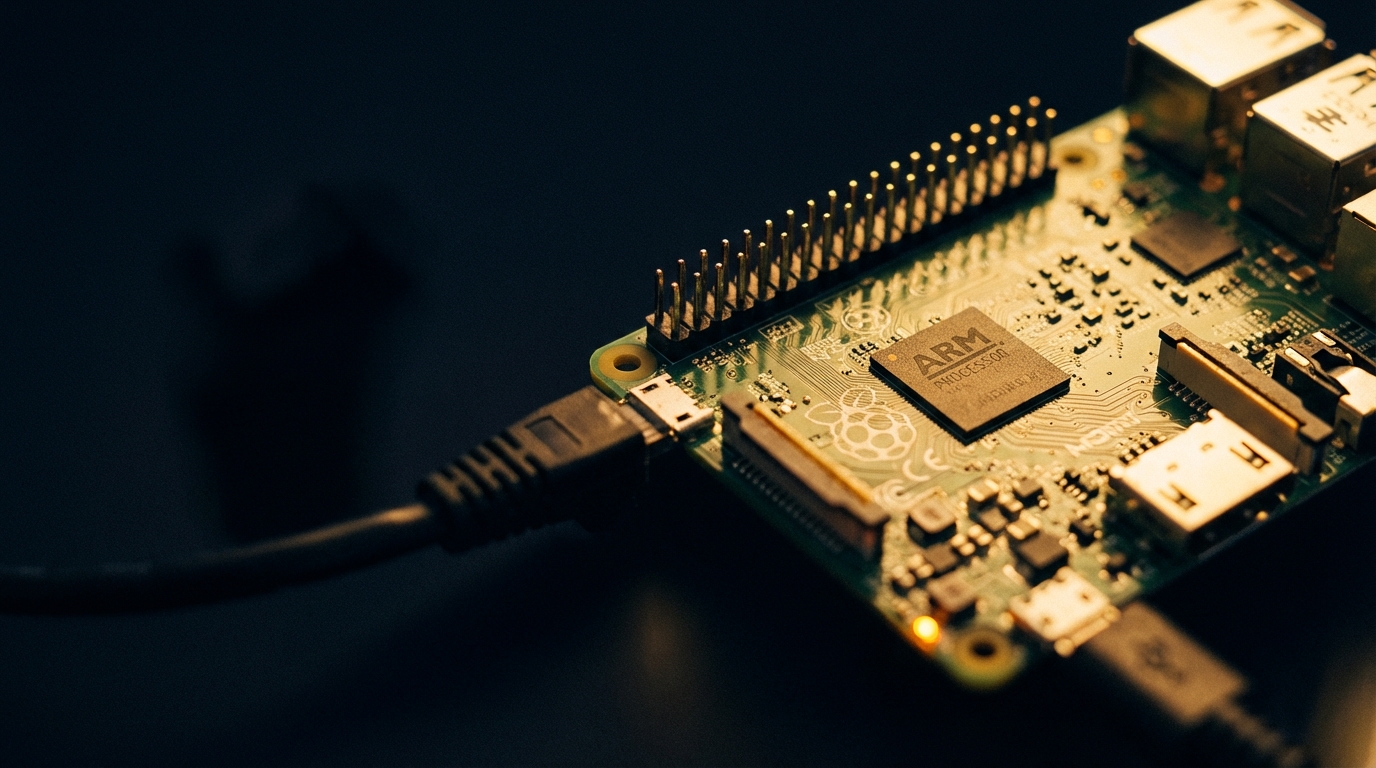
The first engineering problem was also the most unexpected. The speed requirements of the platform demanded dedicated hardware for real-time media ingestion. I looked for something I could buy off the shelf.
Nothing existed.
So I gave myself a crash course in electrical engineering. I bought the textbook. I spent months reading datasheets for microcontrollers, learning signal processing, designing custom printed circuit boards in CAD software meant for electrical engineers. I bought a surface mount soldering oven, soldered prototype boards in my home lab, and read bit streams off an oscilloscope to debug them. I built a rack of servers in my hall closet, stocked up on GPUs and RAM, and taught myself everything I could about DevOps. The gap between “software developer” and “someone who can design and manufacture custom hardware and run their own infrastructure” turned out to be crossable — it just required the willingness to start from zero in disciplines I had never worked in.
There are dozens of devices deployed now, with more coming online as coverage expands. Building custom hardware was not in the original plan. But when the alternative is accepting a limitation that makes the entire system too slow to be useful, you build what you need.

AI that understands context, not just keywords#
The legacy media monitoring platforms search for keywords. Flashbulb understands context.
When a clip comes through the pipeline, it is not just matched against a keyword list. An AI agent — powered by today’s most capable large language models — reads the content and understands what is actually happening. It knows the difference between a minister announcing a policy and a critic attacking it. It understands that a mention of your client’s competitor in the context of a regulatory hearing is relevant even if your client’s name never appears. It can identify when a narrative is shifting — when the framing around an issue changes from “government initiative” to “government scandal” — and flag that shift before it becomes obvious to everyone.
The system identifies who is being talked about, what the story is really about, and how it connects to other coverage. It tracks how narratives propagate across outlets and platforms, and surfaces patterns that would take a human analyst hours to identify.
This is what modern AI makes possible that keyword-based sentiment analysis never could. Not a crude score on a dashboard, but genuine comprehension of what is being said, why it matters, and who needs to know.
Dozens of legislatures in real time#
One of Flashbulb’s most distinctive capabilities is its coverage of Canadian legislative proceedings. Dozens of legislative bodies — federal, provincial, territorial, and municipal — are monitored and processed through the same AI pipeline as broadcast media.
For government relations teams, this is transformative. A bill mention, a committee question, a ministerial statement — these used to require someone physically watching the feed or waiting for Hansard to be published hours or days later. Flashbulb delivers the alert within minutes of the words being spoken. A lobbyist can know that their file was raised in Question Period before the minister’s staff has finished drafting the follow-up.
Building coverage for dozens of legislative bodies required solving different technical problems for each one. The consistency of the output hides considerable engineering complexity underneath.
From ingestion to alert in minutes#
Data flows from the capture hardware through AI analysis and into a search layer where users can find content by meaning, not just by keyword. Every piece of media that enters the system is analyzed, structured, and made searchable almost immediately.
Alerts go out through instant alert channels, and a real-time web dashboard gives the full picture. The platform also generates automated briefing documents, media landscape summaries, and coverage reports formatted for the people who actually need to read them. Decision-makers, not analysts.
The infrastructure behind Shift Media#
Flashbulb is used exclusively by Shift Media. It is not a product we sell separately — it is the infrastructure that makes our communications practice possible. Every client engagement, every media strategy, every rapid response is informed by intelligence that arrives faster and with more context than anything else available in the Canadian market.
I spent twenty years watching political communications teams make decisions with inadequate information, too slowly. Flashbulb is the tool I always needed and finally built.
There is a lot I have left out of this post. Every time I describe a capability in public, a legacy monitoring company bluffs and adds it to their sales deck. If you want to see the full demo instead of the brochure, get in touch.